Dimensional Control Engineering for Oil and G
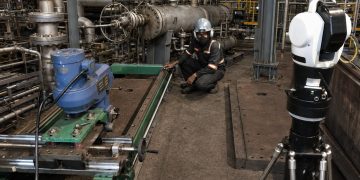
Dimensional inspection, reverse engineering, and 3D scanning for piping, FPSO modules, tanks, and turbomachinery in accordance with ASME and API standards.
THE CHALLENGE IN THE P&G SECTOR
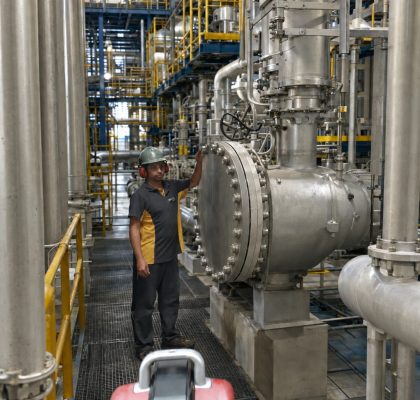
The oil and gas industry operates under strict safety standards in extremely complex environments.
In this context, even minor dimensional errors can have severe consequences:
- Unplanned shutdowns: Delays in connecting modules and piping result in standby costs running into the millions.
- Leakage risks: Spools assembled with residual stress increase the likelihood of fatigue and cracks.
- Unwanted hot work: Manual adjustments and extra welding in classified areas drastically increase operational risk.
Critical Solutions and Applications
Offshore and FPSOs
Modules and Topsides
Dimensional control for coupling, leveling, and integration of processing modules.
Anchoring Systems (Turret and Swivel)
Inspection of flatness, concentricity, and alignment of bearings and rails.
Piping and Tie-Ins
As-Built mapping of piping networks for the precise fabrication of interconnection spools.
Refineries and Onshore Facilities
Turbomachinery Alignment
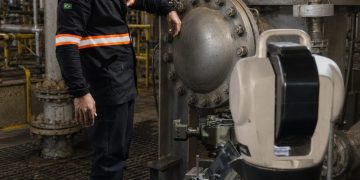
Geometric inspection of compressors, multiphase pumps, and gas turbines to eliminate vibrations.
Tank Inspection
Analysis of ovality, verticality, bottom deflection, and volumetric calibration.
Reverse Engineering
3D scanning of valves, flanges, and critical parts to reconstruct CAD models without the original design.
COMPLIANCE WITH INTERNATIONAL STANDARDS
We provide technical reports that comply with the requirements of standards such as ASME, API, and ANP. Improve the structural integrity of your assets, reduce downtime, and ensure maximum safety in your operations.
WHAT SETS US APART: ZERO REWORK IN THE FIELD
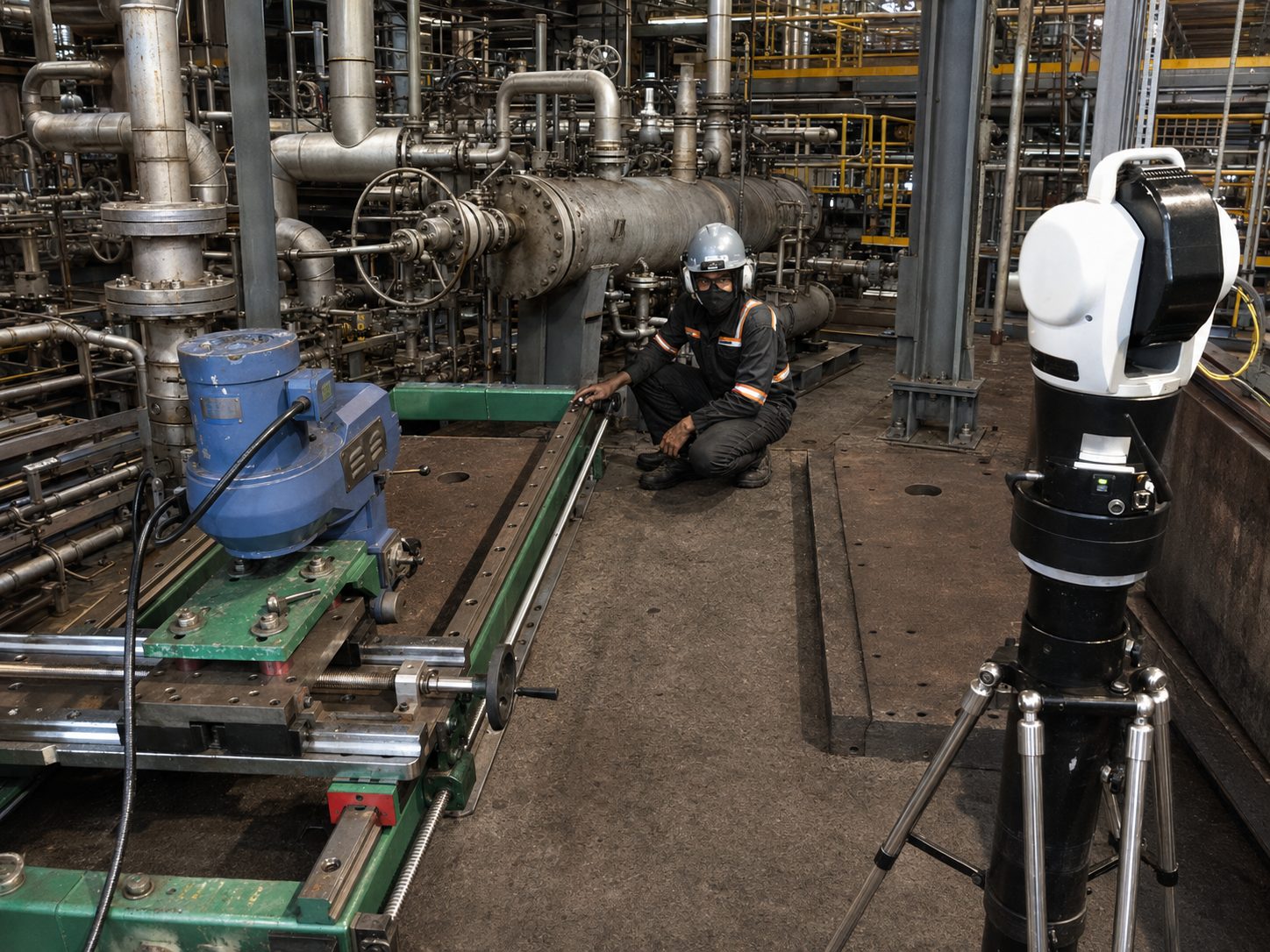
Our measurements are non-intrusive and performed remotely, allowing us to capture complex data without interrupting production or exposing teams to risks.
Clash Detection
Through virtual assembly simulations (Clash Detection), we ensure that spools and structures arrive at the field ready for installation, eliminating rework and hot welding in high-risk areas.